Already open and running? Rooms drift: props break in ways that get patched instead of fixed, wiring gets layered on, and the GM workflow turns into tribal knowledge. I come in, assess what you've got, and upgrade the parts that are costing you time, reliability, or sanity. New tech in old rooms without tearing everything out.
Better tech in rooms you already run.
Centralized Game Master Software
▾
A unified platform that puts every room at your game master's fingertips. Real-time control of timers, hints, audio, and player-facing kiosk displays, all from a single browser tab. No per-room apps, no license fees, no vendor lock-in. Built to run on the hardware you already have, using the buttons and dials you've wished you had sooner.
One screen. Every room. Full control.
Prop Fabrication
▾
Custom props built from scratch: ESP32-based electronics with purpose-built firmware, CNC-milled enclosures, and hardware designed to survive ten thousand excited hands. If it needs to light up, lock, move, detect, or react, it gets built here.
Electronics, firmware, enclosures. Built to last.
Room Development
▾
End-to-end room design and buildout: from initial concept through puzzle flow, set design, and technical integration. Every room is designed to surprise players without surprising your staff. Clean wiring, accessible maintenance points, and documentation that doesn't require a decoder ring.
From concept to grand opening.
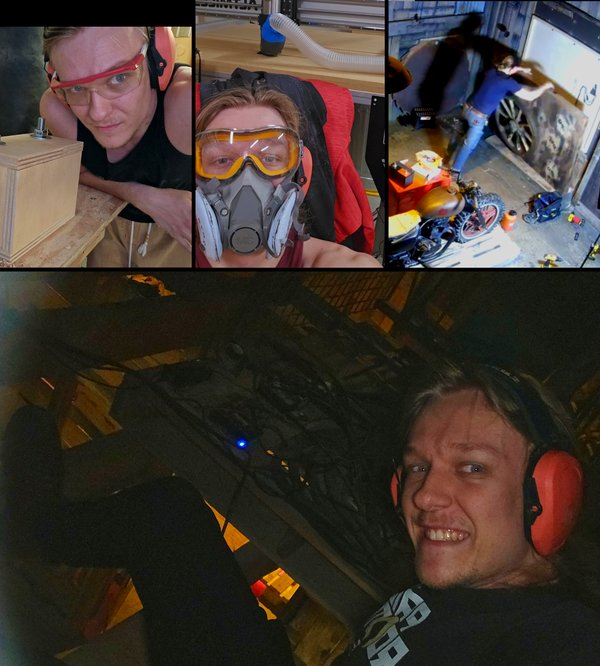
Robert Meucci
I build escape rooms from the circuit board up. The software your game masters use, the firmware inside the props, the enclosures those props live in, I make all of it, and I make it talk to each other.
Most of what's on the market asks you to adapt your rooms to someone else's platform. I'd rather build the platform around your rooms. Every facility has its own quirks, its own flow, its own way of running games. The technology should bend to fit that, not the other way around.
If something in your room can be smarter, cleaner, or more reliable, that's the conversation I want to have.
How I Work With Existing Rooms
You don't have to rebuild a room to make it run like new. Most facilities are sitting on good rooms held back by aging tech: props from vendors who stopped answering the phone, control software chained to one particular PC, workarounds that quietly became procedures. That's the work I'm built for.
Assess. I walk the room, log every prop, controller, and cable, and figure out what's actually happening versus what anyone remembers being installed.
Integrate. Ethernet props from one vendor, USB props that only talk to one machine, hardwired effects from a build crew nobody can reach anymore. I bring it all under one control system without ripping any of it out.
Fix. The maglock that's been "acting up" for eight months, the prop that only works if you hit it just right, the timer that drifts. These get fixed properly, not patched again.
Document. Whatever I touch gets written down in plain language, so the fix outlives my visit and your staff can handle the day-to-day without a phone call.
Want to see some of it? The gallery has props, rooms, and the software in action.